„How do we prepare employees for tasks that do not yet exist, for the use of technologies that have not yet been developed, to solve problems that we do not yet even know will arise?"
Over the past twelve years, work systems – and with them learning systems – have changed fundamentally. Digital transformation, and artificial intelligence (AI) in particular, have led the vision of Workplace Learning – learning in the work process to reach a fundamentally new dimension. It is now possible to integrate learning into the work process in a self-organized way and in dialogue with generative AI (GenAI).
In the future, learning will no longer happen when a learning offering is available, but when a challenge in the work process has to be mastered.
The "stockpile learning" practiced so far, following curricula in formal teaching/learning arrangements, will be replaced – as needed – by targeted, dialogic learning in the work process. Supply-oriented, formal learning thus loses a great deal of its significance and is increasingly limited to foundational education as well as legally mandated learning measures.
That is why we now speak of Workplace Learning – next Generation, which characterizes the future, AI-based learning – Future Learning.
This new form of Workplace Learning means a fundamental change in the learning concept and in the learning culture toward self-organized learning. While in classic trainings usually less than ten percent of the conveyed knowledge is applied in everyday work, the new linking of work and learning builds directly applicable knowledge precisely when a challenge in the work process has to be mastered.
Inefficient transfer phases are eliminated, because learning and working go hand in hand. Learning becomes 100% effective in action!
Generative AI enables not only personalized learning paths but also the scalability of the learning concept. Skills diagnostics can be used effectively and economically by every employee at any time. The AI learning partner accompanies employees as a personal planning and learning partner – regardless of place and time.
According to the management consultancy Gartner, Workplace Learning – next Generation can result in cost savings of over 50% (Gartner, 2025).
It combines effectiveness with economic viability and enables a new learning culture that is self-organized, personalized, and collaborative. Companies thereby create not only more effective learning processes but at the same time secure a decisive strategic advantage in their organizational transformation.
You therefore do not have to throw the entire organization into turmoil right away. Many organizations start with pilot projects, gather initial experiences, and roll out Workplace Learning step by step across the organization. That is why we have designed an offering for a pilot program that enables you to gather experience with this innovative learning concept at a manageable risk.
Offering of a Pilot Program
That is why we offer you a comprehensive, guided pilot program to gather initial experiences.
Phase 0: Co-Creation (3 months)
Discovery workshops
Co-creation sessions
Idea collection
Pilot agreement
Phase 1: Pilot Phase (8 months)
Onboarding
Active use with a pilot group (at least 6 participants)
Skills diagnostics: creating skills profiles, analysis and evaluation with development recommendations
AI learning partner: continuous support with dialogic advice in the work process, available 24/7
Scenario training: practicing difficult challenges with AI personas
Leadership content or your own content
Long-term memory: the AI learning partner knows the learner's learning history over years and can incorporate it into its feedback
We accompany this process with our experts Prof. Dr. Werner Sauter and his team throughout the entire duration.
It is important to begin this change process now, because the world of work is already undergoing a fundamental transformation. It is time to let go in corporate learning and to abandon outdated learning myths, linear training plans, and the desire to control all educational measures centrally.
Unlock the full e-book
Enter your details to download the full e-book as a PDF and read it online.
GDPR-compliantFreeInstant access
E-Book unlocked! 🎉
You now have access to the full e-book and can read all chapters online.
Scroll further down to read the e-book.
Chapter 2
Workplace Learning: Work and Learning Grow Together
"The industrial revolution has bequeathed us the „assembly-line theory" of education. According to it, learning takes place in special locations at long pre-planned, minute-precise times, mostly in front-of-class teaching with prescribed curricula, the same for everyone. It is easy to make fun of this model. Most experts believe that, despite all its past achievements, it is bankrupt today."
In Future Learning, formal and informal learning are brought together into a holistic concept of Workplace Learning - next Generation.
2.1 On the Way to Workplace Learning – next Generation
"The World Economic Forum assumes that 44% of employees will have to build fundamentally new skills in the coming five years. In its current report "Future of Jobs 2023", it concludes that analytical and creative thinking as well as artificial intelligence (AI) and handling big data will be the most sought-after skills by 2027. Leadership qualities and social influence as well as curiosity and lifelong learning will also become more important. Stockpile learning for knowledge and qualifications, by contrast, plays a subordinate role."
This trend is confirmed by further studies as well as the trend radar of the Haufe Akademie (2024). According to this study, the central factors of future competencies are:
Digital learning and technology-supported knowledge building
Knowledge management and competence development
Agile methodology and adaptive learning
Holistic leadership and organizational development
New forms and methods of working – New Work – are encountered constantly: in professional life, in old and new occupations, in companies and organizations. Networking, complexity, digitalization, artificial intelligence, agility, or self-organization are the relevant keywords. Behind all these forms lie expanded requirements to act in a self-organized and creative way, new competencies and new values underpinning them.
Knowledge, competencies, and values can only be acquired by employees in a way that is effective in action. Cramming and rote learning are of little help here; a forward-looking learning – Future Learning – is required. This new learning world must be a mirror image of practice if employees are to be prepared for the future challenges of New Work.
Future Learning and New Work represent the future of learning and working.
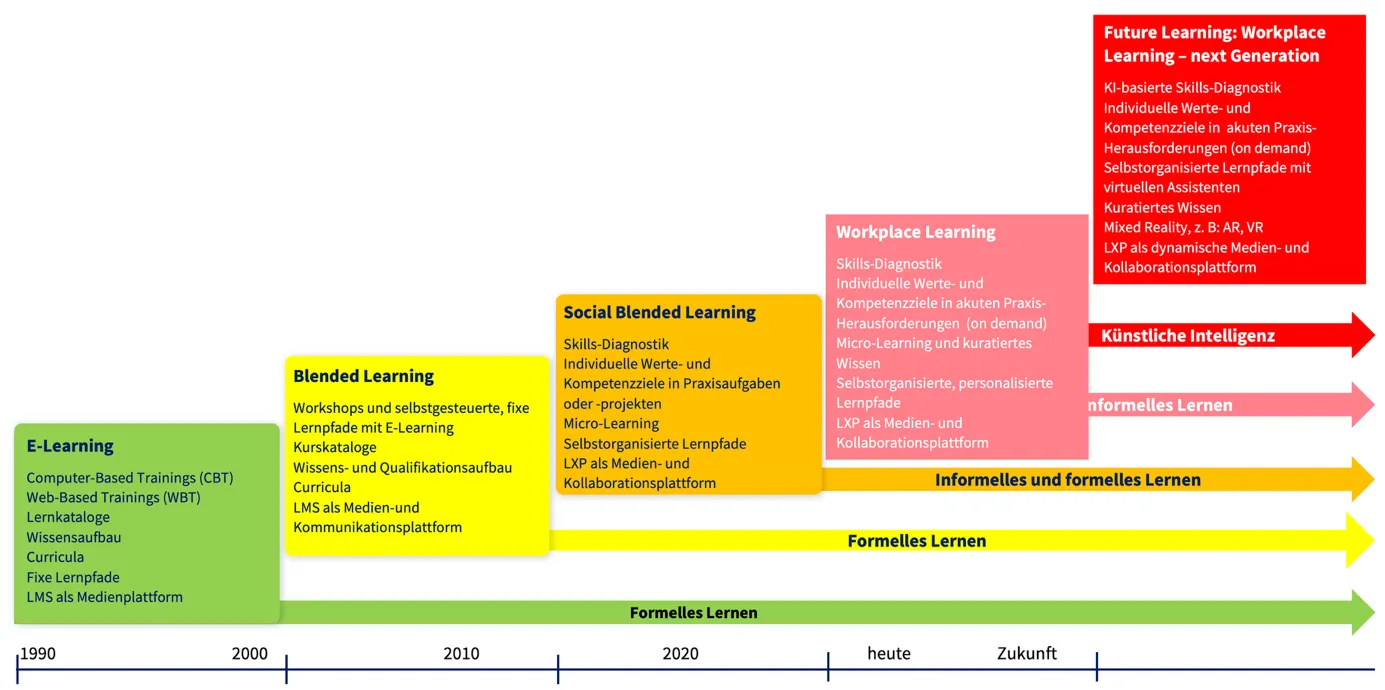
The development of corporate learning over the past three decades is characterized by five phases of digitalization, or of digital transformation – that is, the fundamental change of the business model of corporate education.
Fig. Development of technology-based learning over time
We have summarized our vision of learning in the future as follows:
Workplace Learning takes place primarily in a values- and competence-oriented way in the process of work
Future Learning can therefore no longer be separated from one's own values and competence development. Training and continuing-education offerings are, as needed, sought in a supporting and supplementary role and incorporated promptly, but they do not form the center of learning. Actual capability to act is established through competencies. In this, values transformed into one's own feelings form the actual cores of competence, which provide motivation and orientation. Without feelings, without emotional change, there will be no effective learning in the future. Today, knowledge is available quickly and increasingly also curated – that is, selected carefully and specifically for the learners with the help of AI.
Workplace Learning is implemented by the learners themselves, in a self-organized and personalized way, with the help of artificial intelligence.
Due to its high complexity, learning in the process of work increasingly requires that challenges be mastered together with colleagues, learning companions, managers, or with the support of experts. This exchange increasingly takes place online, so that learners have ever broader networks at their disposal. Increasingly, these processes are accompanied by virtual assistants that provide well-founded feedback and targeted solution hints. Future Learning therefore presupposes a networking of human learning and cooperation partners and of human computers as learning assistants.
Workplace Learning is shaped by social, collaborative learning and by learning in dialogue with AI learning partners.
Workplace Learning is the central strategy of the future, because the character of work continues to change fundamentally. Digital transformation, and artificial intelligence in particular, have led the vision of Workplace Learning to reach a fundamentally new dimension.
In Workplace Learning – next generation, learning is integrated into the work process in a self-organized way and in dialogue with generative AI, so that the knowledge needed in each case is made available – „on-demand" – in curated form to master challenges in practice.
In the future, therefore, learning will no longer happen when a learning offering is available, but when a challenge in the work process has to be mastered. The "stockpile learning" practiced so far, following curricula in formal teaching/learning arrangements, will be replaced by targeted, dialogic learning as needed in the work process.
Supply-oriented, formal learning thus loses a great deal of its significance and is increasingly limited to foundational education as well as legally mandated learning measures, e.g. in the area of safety.
This has the consequence that the roles of all those involved change fundamentally. The learners organize their learning processes themselves, the managers change their role from supervisors to development partners of their employees, the HR developers become learning architects who above all design the enabling space – the digital „learning house" – for self-organized learning, and the trainers become learning companions who enable these learning processes through coaching.
For HR development and for inter-company education providers, new and attractive opportunities thereby open up, provided they fundamentally change their business models.
A necessary precondition for Future Learning is the acceptance of employees and managers.
2.2 The Learning Objectives Pyramid Is Turned Upside Down
"Anyone who does not know where they want to go should not be surprised if they end up somewhere completely different."
Why do we promote corporate learning? There is a simple reason for this. Employees should be enabled to master current and future challenges in the work process in a self-organized way. The problem is that future challenges are often not yet known today. This also applies to the methods and tools needed for them.
With the stockpile learning practiced so far, these tasks cannot be mastered. There is only one solution: we must enable employees to master their challenges in a self-organized way. For this they need the necessary attitude, that is, values, and the capability to act, i.e. competencies.
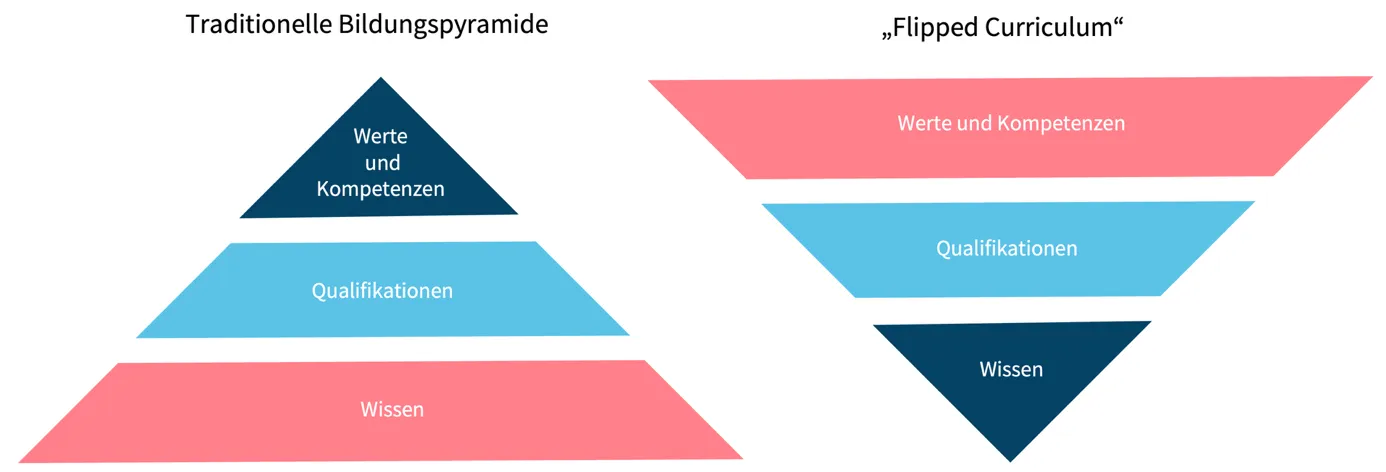
We are currently experiencing a paradigm shift, massively reinforced by artificial intelligence, that turns the learning objectives pyramid upside down. Curricula with fixed knowledge- and qualification-oriented learning objectives and content are gradually being replaced by „flipped curricula".
Thus the individual values and competencies (soft skills) form the goals of corporate learning.
Fig. From curriculum to "flipped curriculum" (after Seufert 2024)
Knowledge and qualification remain necessary, but are no longer the goal; rather, they are the necessary precondition. This means that the required knowledge can also be made available curated through AI.
Knowledge, qualification, and competence as well as skills are often used synonymously in everyday language. Skills, knowledge in the narrower sense, or qualifications are in the future the necessary preconditions, but no longer the goal of employee development. Ultimately, what counts is the ability to master challenges in practice in a self-organized way with the appropriate attitude and to act effectively. This has fundamental consequences for corporate learning.
Values and competencies do not develop through instruction, but through acting in real situations.
Values act as an inner compass. They steer decisions in action and do not develop through directives, but through reflected experiences and the experiencing of consequences.
Corporate learning is not a standardized stockpile process, but part of the work process. Values and competencies arise in doing – accompanied by reflection and dialogue, not through knowledge transfer or exercises in the laboratory.
2.3 Workplace Learning – Learning Planning Is Turned Upside Down
"You cannot teach anyone anything; you can only help them to discover it within themselves."
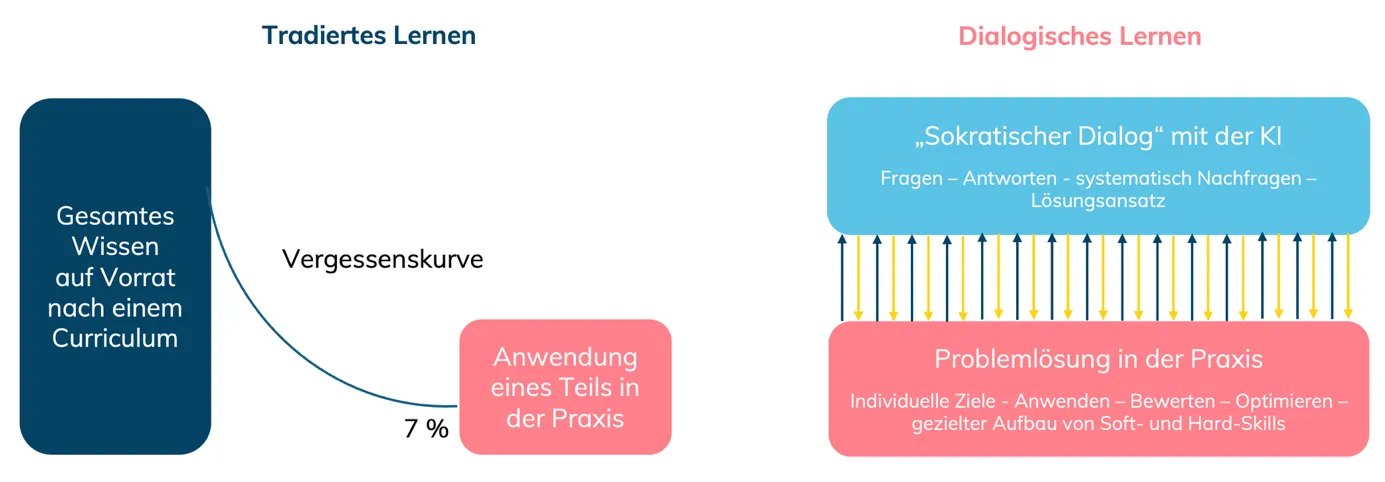
Traditionally, in corporate learning the required knowledge on a subject area is first „conveyed" in a seminar or with e-learning modules. Then come exercises to „consolidate" this knowledge, along with tests or examination tasks. Values and competence development is occasionally initiated through transfer or practical tasks, but is frequently left to chance. This also explains the extremely low, usually single-digit application rates of the knowledge taken in.
Instead of trying to somehow improve learning transfer, we are better off shifting the learning process into practice from the very beginning. Then transfer becomes unnecessary, because new knowledge is applied directly in mastering current challenges. The efficiency of learning is increased exponentially and sustainably.
The most important place of learning is the work process, because values and competencies can only be built in a self-organized way while mastering real challenges.
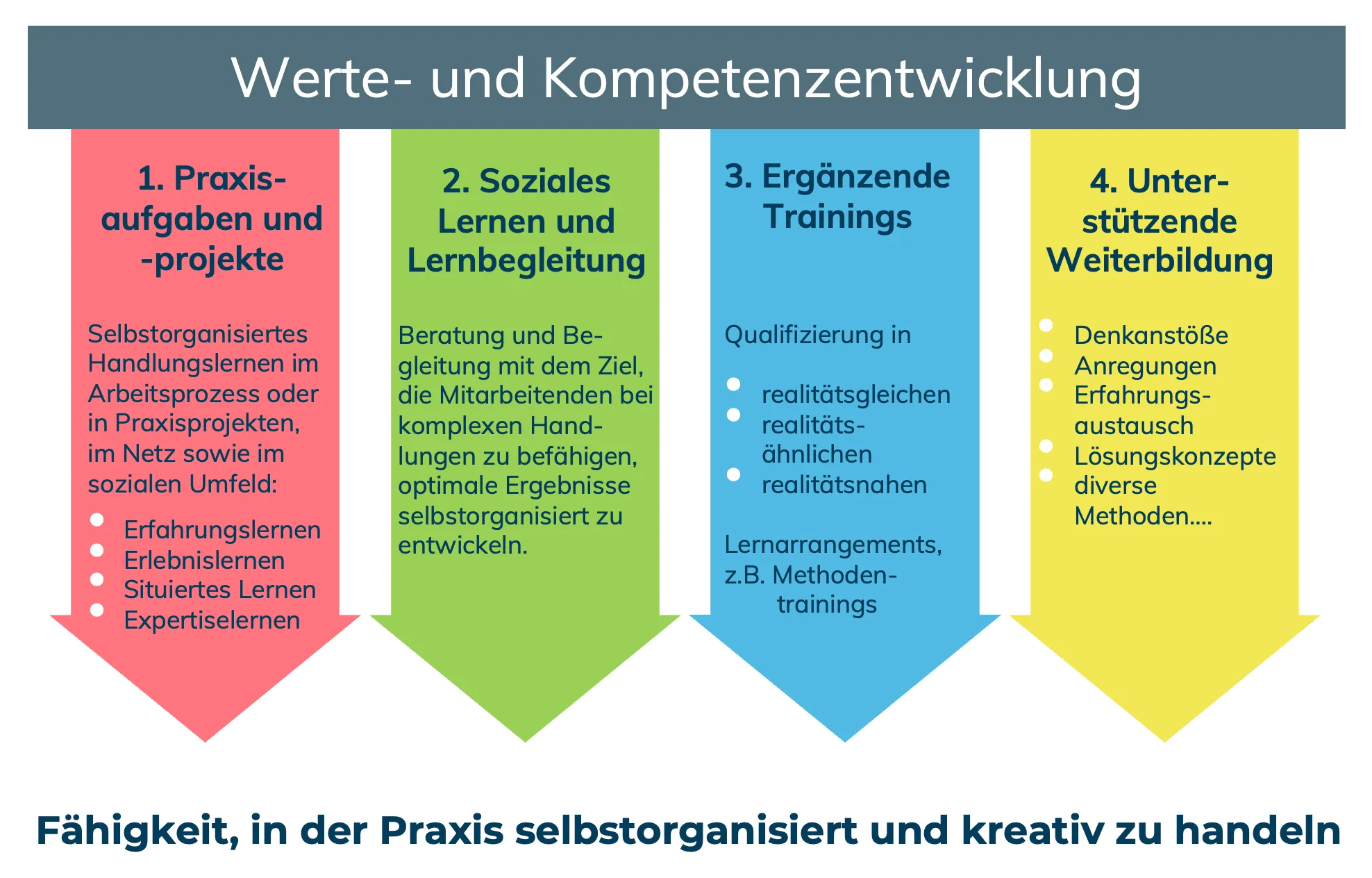
In Workplace Learning, the sequence of learning planning is turned upside down. Values and competence development takes place above all in the context of challenging practical tasks and projects, in an integrated process with social learning and learning support. This enables personalized learning processes that can be supplemented by training measures and supported by continuing-education measures.
Fig. Basic structure of the learning paths in Workplace Learning
This results in the following sequence of learning planning:
At the beginning is the question of in which challenges in practice or in a practical project the targeted soft skills can be built. Together with their manager, employees agree on personalized learning paths in the work process based on their skills diagnostics.
In the second step, it must be clarified what support the employees' self-organized learning processes require. Here, social learning with learning partners and colleagues plays a central role. Learning companions and experts – increasingly above all the AI learning partner – provide support and advice in these processes.
Only in the third step are these learning measures supplemented, as needed, by trainings. Among other things, method trainings, e.g. on Scrum, are useful when the practical tasks are to be carried out according to agile principles.
In supporting continuing-education measures, basic knowledge and foundational qualifications can be built or impulses for the self-organized learning processes can be given.
Workplace Learning takes place in practice from the very beginning; work and learning grow together. Concepts for promoting learning transfer thereby become largely unnecessary. Responsibility for learning shifts to the employees, who are supported by HR development and by their managers. Trainings and continuing-education measures have a supporting or supplementary function.
2.4 The Path to Future Learning
The study „2026 Top Priorities for CHRO" (Gartner 2025b) by the international management consultancy Gartner highlights the most important challenges and priorities in corporate learning for the year 2026:
Priority 1: Use AI to fundamentally transform HR
Without a new HR business model, AI remains ineffective.
The HR function needs an „innovation team" that systematically drives the repositioning of HR and the introduction of AI.
The roles in HR must be fundamentally redesigned.
Standard processes are increasingly taken over by AI-supported systems.
Priority 2: Shape the human-machine collaboration
Invest in differentiating competencies that competitors can only imitate with difficulty.
Optimize the targeted deployment of employees in practice to achieve immediate impact.
Enable the purposeful collaboration of humans and AI.
Priority 3: Mobilize the managers
Make the initiation and support of change a core task of the managers.
Adapt the expectations of managers as well as the values and competence models to the changed challenges.
Enable a targeted skills development of the managers.
Priority 4: Develop the culture to strengthen performance
Connect the company values with everyday work by mapping them in a values model with clearly described levels of expression.
Describe the expected attitude with which employees act in practice.
Initiate targeted development processes for the values of all teams and employees in the process of work.
Initiate a targeted development of the culture at all levels.
This means a qualitative change in the way we learn. And it leads to a fundamentally changed business model of corporate learning – Future Learning in the form of Workplace Learning – next Generation. Compared with traditional educational concepts, this exhibits the following fundamental characteristics:
Fig. Characteristics of Future Learning
Future Learning is determined by values and competence goals.
The planning of personalized learning processes is carried out in a self-organized way by the employees.
The learning processes are determined by the challenges in practice and in practical projects, which are worked on collaboratively.
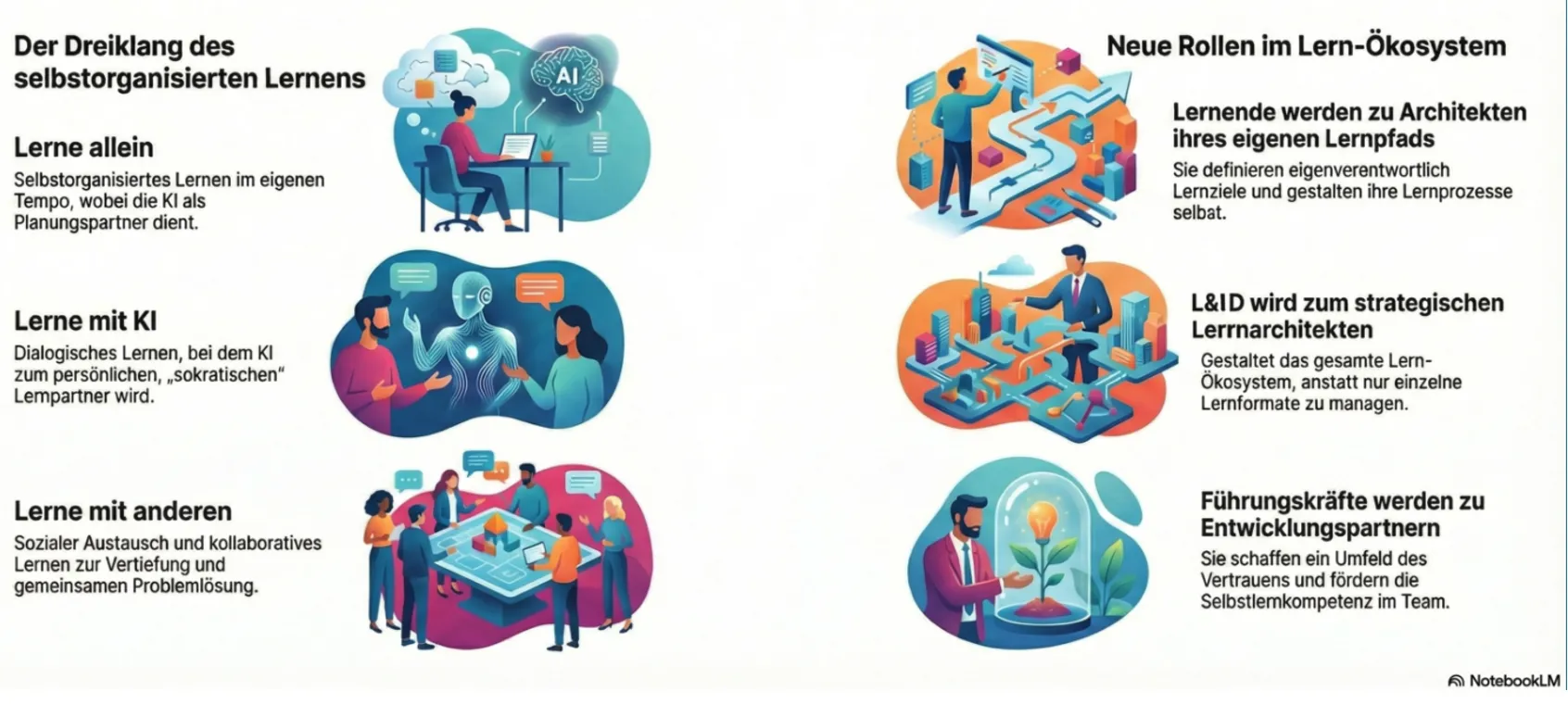
Learning takes place in a triad:
Fig. Triad of learning
The roles in the learning process change fundamentally:
The learners are at the center and become architects of their personalized learning path
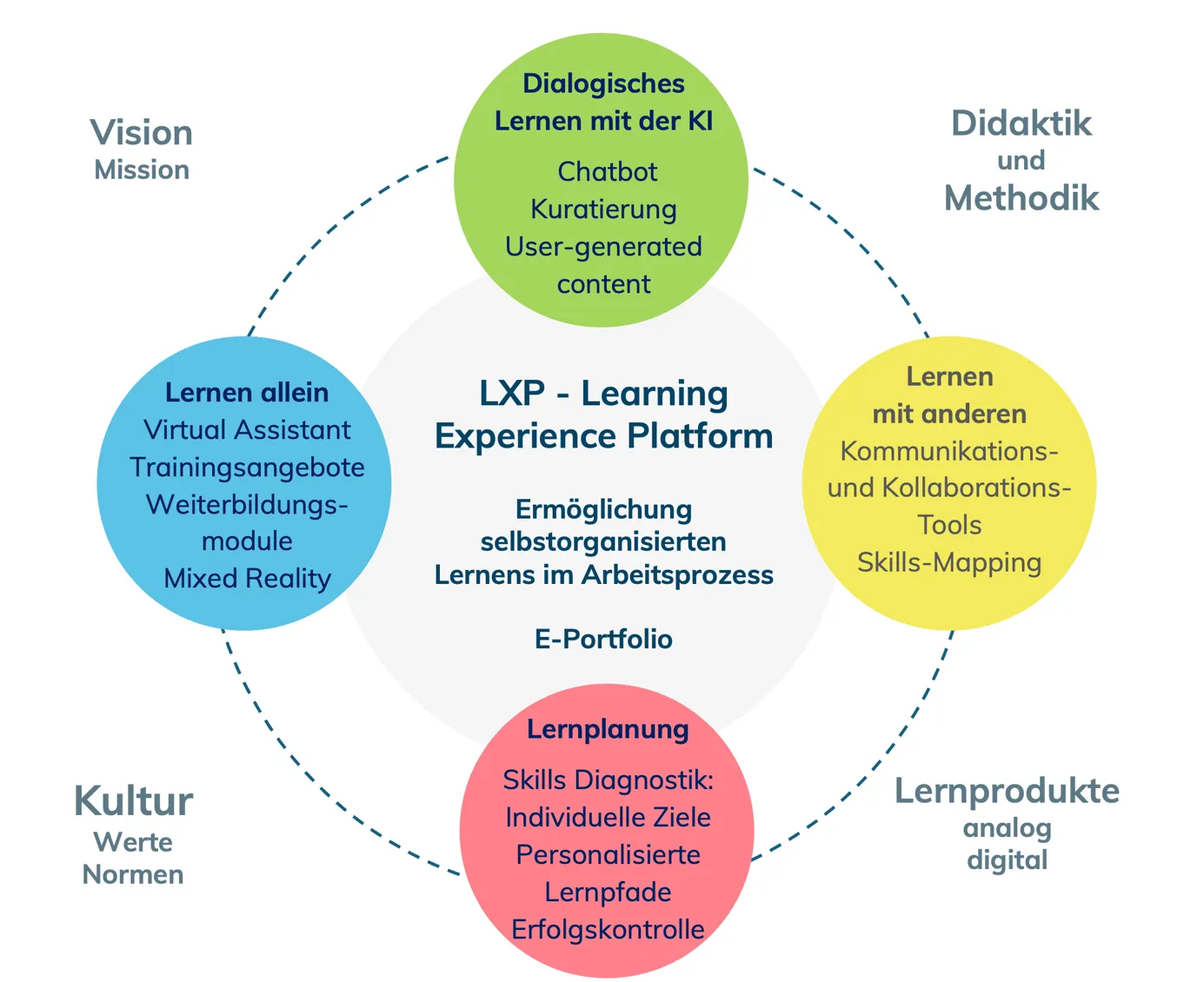
The HR development transforms into a strategic learning architect who designs the enabling space (Learning Experience Platform – LXP) for self-organized learning (Learning & Development)
The managers become development partners of their employees and enable their self-organized learning
The trainers take on the role of learning companions who enable and coach self-organized learning in the organization.
2.5 Enabling Space – Learning Experience Platform (LXP)
"Learning Experience Platforms stand at the beginning of a learning revolution."
Values and competence management no longer concentrates on the detailed planning of teaching/learning processes (planning fixation), but on enabling the self-organized building of knowledge, qualification, values, and competencies in personalized learning processes (realization fixation).
A Learning Experience Platform is an AI-controlled learning and working environment that is consistently designed from the perspective of the employees and enables personalized, self-organized learning processes.
Fig. Structure of the Learning Experience Platform
2.6 AI in Corporate Learning
"Of all the areas affected by AI, perhaps the greatest change is taking place in the area of corporate learning. After a year of experimentation, it is now clear that AI will revolutionize this area."
According to a current study by the Boston Consulting Group (2025), about 50% of employees and almost 85% of managers regularly use generative AI (GenAI) tools. A further study by Christoph Meier, SCIL (2025b), shows that the application of GenAI has also arrived in the field of HR development. It is notable, however, that usage concentrates on a few fields, in particular on the development of learning materials and assessments as well as the analysis of data. So far, very few companies seize the opportunity to bring about a fundamental change in corporate learning with the help of AI.
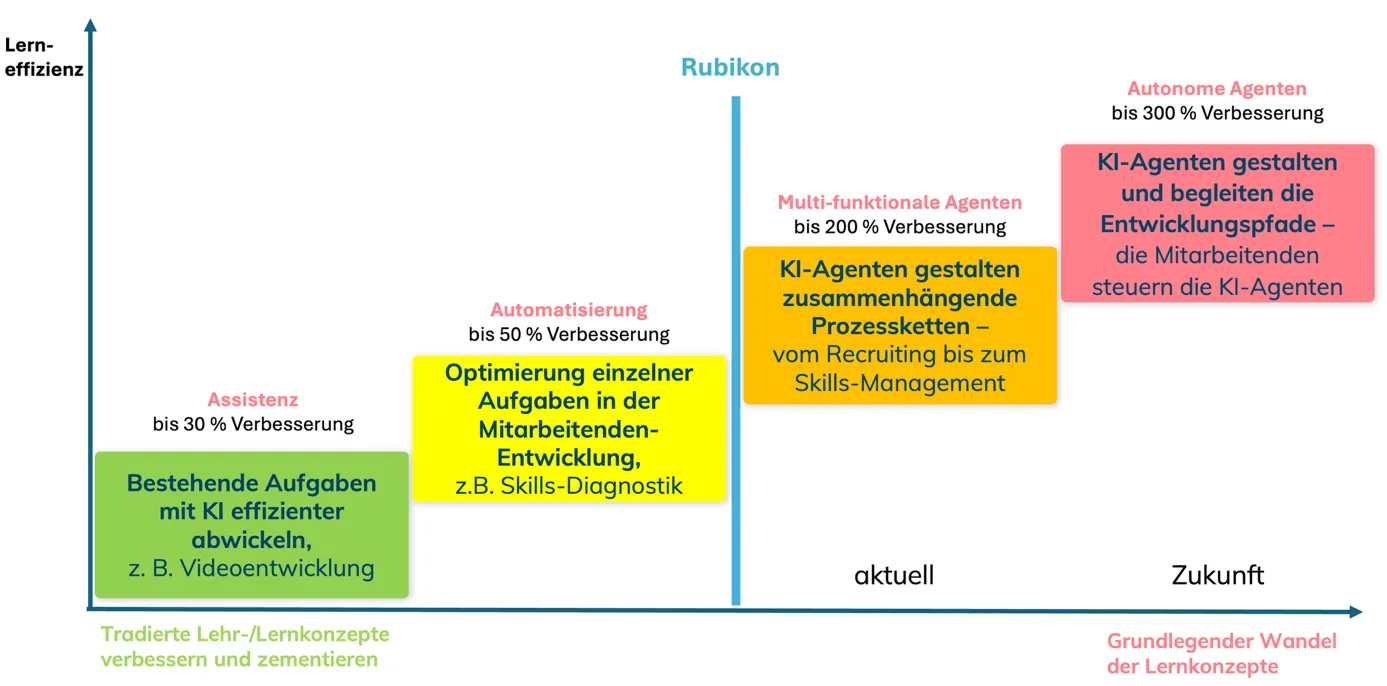
The core question in today's corporate learning is: whether we continue to use AI above all to cement traditional teaching/learning concepts, or whether we deploy it as a catalyst to initiate the necessary paradigm shift toward self-organized learning in the work process.
It is becoming apparent that we have reached a „Rubicon" and are increasingly using AI as a multifunctional or even autonomous agent.
Fig. Use of AI in corporate learning (based on Bersin 2025)
While AI has so far predominantly optimized traditional teaching methods or individual processes, in the future it will shape entire process chains from recruiting to targeted skills development, so that learning increasingly takes place in a networked and systemic way. In the future, employees will steer AI agents that independently develop, accompany, and adapt learning paths. As a result, the learning culture will change further; learning will become personalized, adaptive, and dynamic.
Generative artificial intelligence is thus more than a didactic tool. It is a source of impulses for corporate learning, which thereby becomes a central lever for the realization of companies' strategic goals.
2.7 Skills Diagnostics
"Think of the countless management decisions we make in our companies: whom we hire, whom we deploy in which function, how much we pay someone, how we staff a team, and who is promoted into a new position. All these decisions are made on the basis of "judgment", which means that bias, opinions, and a lot of politics are involved. How much better would our companies and careers be if we really knew what skills each individual has?"
It is therefore not enough to determine what knowledge someone has, which qualification certificates they have completed, and which activities they have carried out so far. What is decisive are rather the soft skills, that is, the attitude, which is based above all on internalized values, as well as the capability to act in order to solve, in a self-organized way, challenges that are still unknown today. That is why a professional skills diagnostics is needed.
Skills diagnostics is used for the targeted development of employees' values and competencies as well as for well-founded personnel selection in recruiting and for new employees.
With support from AI, competence diagnostics can today be used by every employee whenever they want to plan their own learning. For this, a system is needed that optimally adapts to the needs of one's own organization.
Skills diagnostics is a procedure for making values and competencies transparent at the organizational and team level as well as at the individual level, for analyzing and evaluating them, in order to plan targeted development measures in a self-organized way.
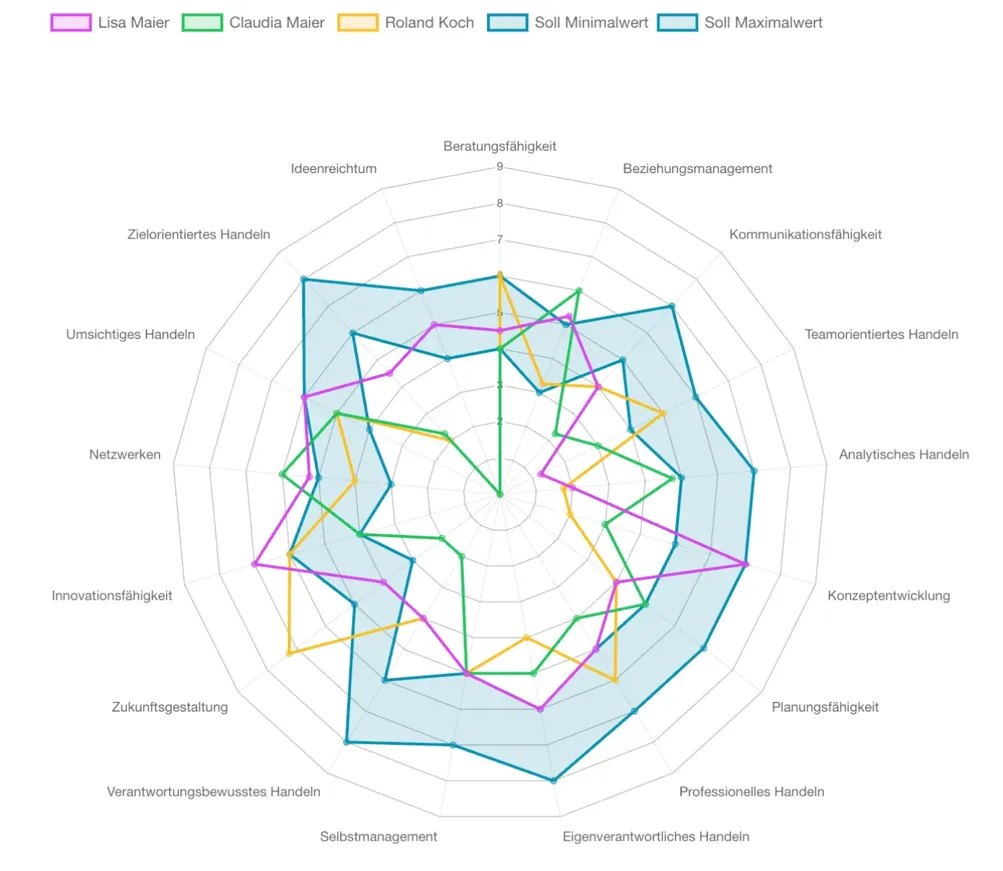
This system of skills diagnostics is usually designed as a rating system, in which employees evaluate the individual behavioral anchors and the results are aggregated in each case into a values or competence expression. For recruiting, where one cannot yet draw on external assessments, a ranking system is generally used, which enables personal values and competence assessments without „desired" values being entered. This makes an objective picture possible.
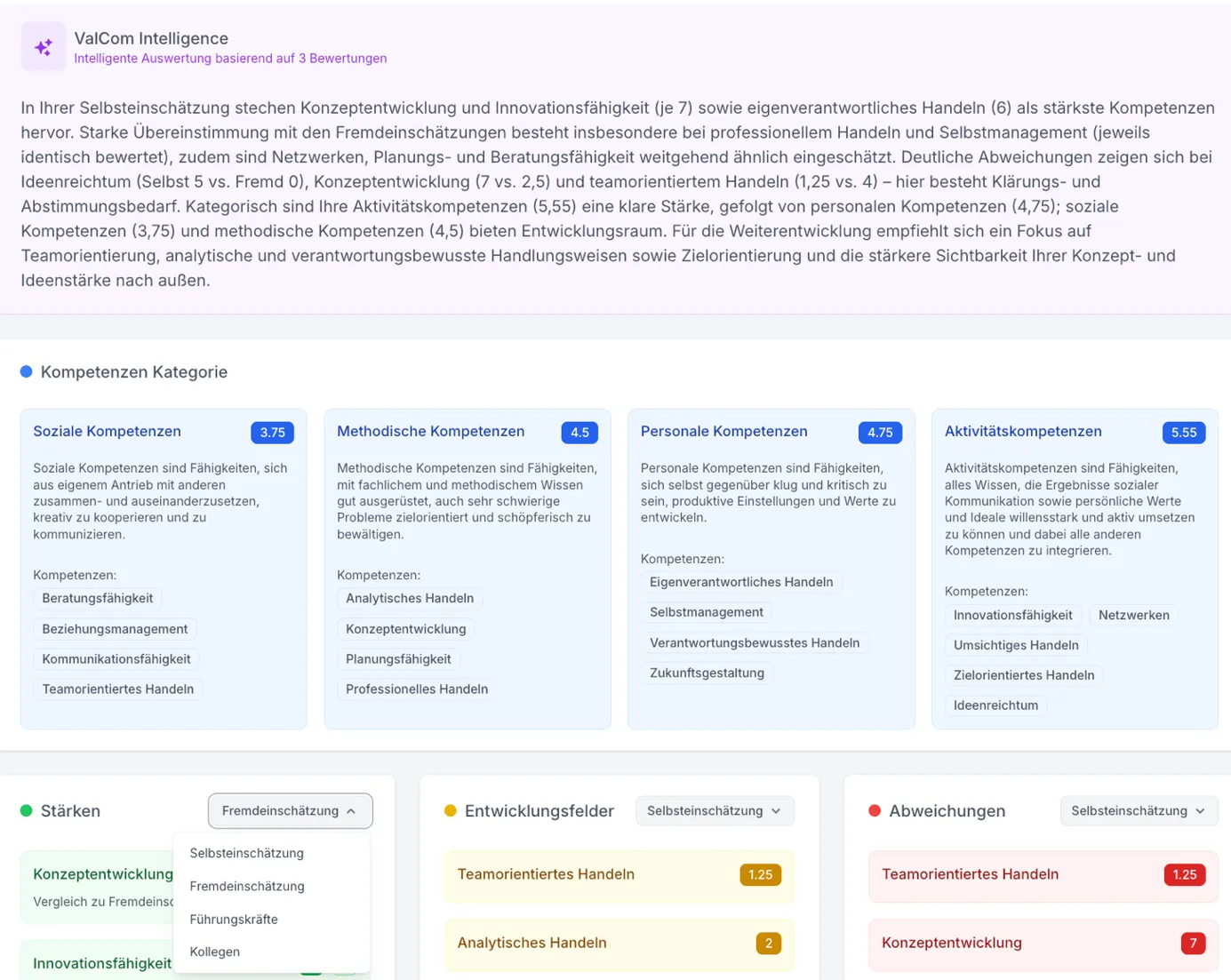
Fig. Example of an assessment result (Source: oneclick Learning GmbH)
From this, an individual reporting can be derived with the help of AI.
On the basis of these recommendations, employees can now – if necessary in dialogue with the AI – define their learning goals and optimize their personalized learning path.
This skills diagnostics enables:
the self-responsible derivation of individual values and competence goals and of the necessary hard skills for the respective function,
the self-organized design of personalized learning paths with suitable practical tasks and projects, social and professional learning support, as well as possible trainings and continuing-education measures.
Thus competence diagnostics is scalable and enables an economical and effective implementation of the vision of Future Learning.
Teams and the entire organization also each exhibit specific competencies that develop in team-related or organizational actions. These can likewise be captured, analyzed, and evaluated in order to derive team or organizational development measures from them.
The AI-based skills diagnostics:
creates, with the help of an AI-based reporting, the transparent basis for every employee to diagnose their values and competencies in a self-organized way,
enables comparisons of the individual or team-related expressions with others or with target profiles,
forms the basis for values and competence goals at the individual, team-related, and organizational levels,
enables a targeted, personalized values and competence development,
creates the basis for an organization-wide skills management at all levels,
makes transparent which competencies are most important for performance,
shows, at the organizational and team level, the spread of the assessments by graphically highlighting the standard deviation (68% of the answers).
2.8 Dialogic Learning with an AI Learning Partner
In today's world of work, the boundaries between learning and working are increasingly blurring. According to a current Gartner study, corporate learning is increasingly integrated into the work process. This can lead to an efficiency increase of up to 50%.
Until now, corporate learning often took place in isolated formats: seminars, e-learnings, or workshops were planned and carried out centrally – often detached from the actual need and with hardly measurable practical transfer. But in a world of work that is becoming ever more dynamic, employees need knowledge precisely when challenges in the work process have to be mastered.
This is where generative artificial intelligence (AI) comes into play. AI can act as a personal learning partner that supports employees through dialogic learning directly in their work process. Instead of being dependent on static learning formats, your employees develop their competencies in direct exchange with the AI – situationally, in a needs-based and practice-oriented way.
Fig. Paradigm shift: from teaching to dialogic learning
In dialogic learning, it is no longer the building of stockpile knowledge but the particular problem in the work process that stands at the beginning of the learning process.
Employees build the knowledge needed to master their problems step by step through targeted communication with the AI and apply it directly in practice. If uncertainties exist, they can immediately follow up and ask the AI for further explanations.
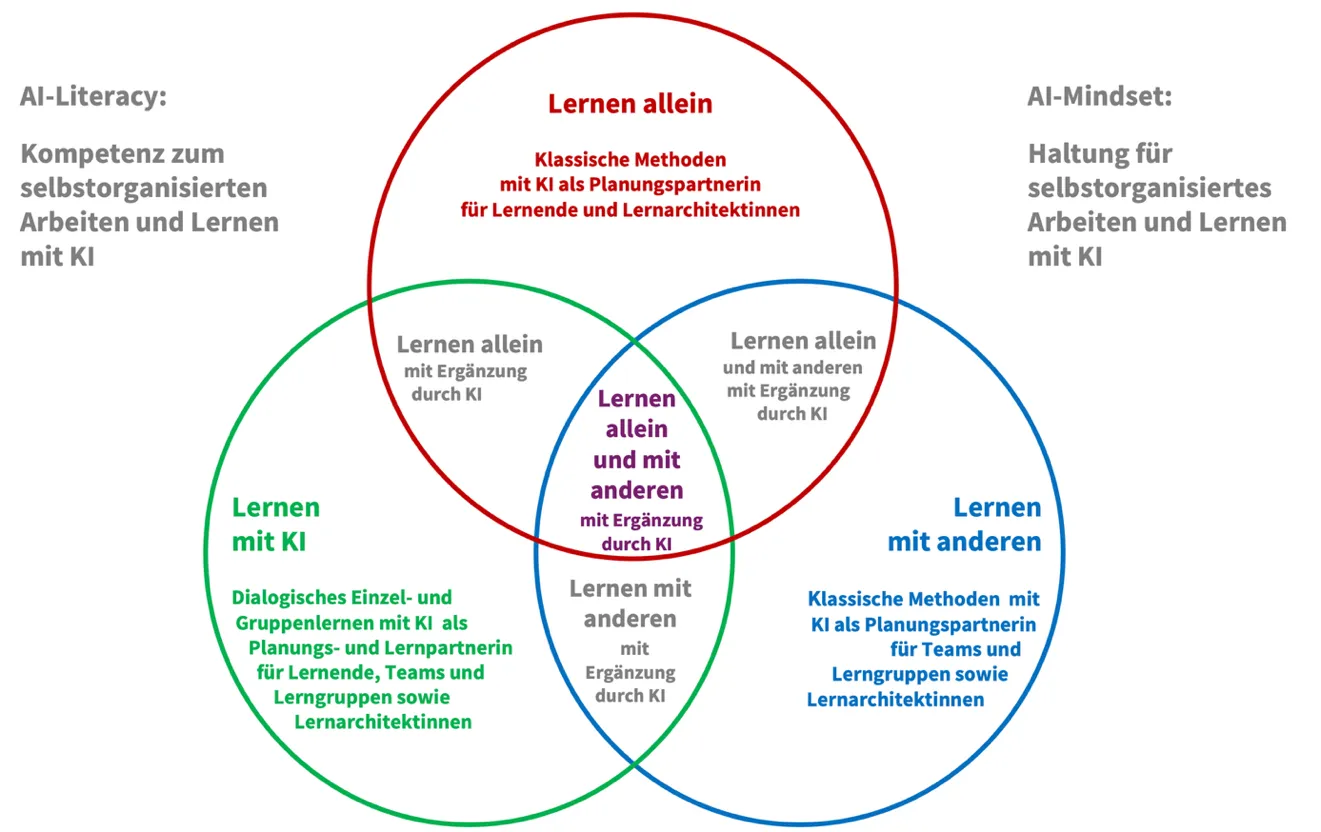
In order to use the AI optimally as an assistant that delivers the necessary inputs to organize learning in a self-organized way, prompts play a special role. This dialogic learning presupposes that the learning processes begin with an initial question, e.g. „What are the essential causes of this problem?". This is followed by questions that build on one another in order to develop a solution. The learners work out definitions with the AI, formulate further questions, and ask for examples or experiences. They clarify with the AI how what has been learned could be applied in various contexts, question the connections with other concepts, and reflect on their learning experiences.
This dynamic learning differs fundamentally from conventional methods.
While in classic trainings less than 10% of what is learned is actually implemented in practice, dialogic learning takes place directly in application – it is thereby sustainably integrated into the work process.
Employees develop their knowledge, which is precisely tailored to their needs, in a targeted way and follow personalized learning paths that take into account their previous abilities and career goals. Learning takes place in a needs-oriented way, so that intrinsic motivation is fostered and direct added value is created in the work process. Through the integration into everyday work, separate training times are eliminated. The continuous use of AI strengthens digital competencies and fosters a culture of self-organization in which employees learn in a self-responsible and efficient way.
This leads to a significantly increased return on investment (ROI) in corporate learning and a heightened performance of the entire organization.
Dialogic learning can already be implemented today through generative AI (GenAI). What is decisive, however, is that this approach is embedded in a holistic learning strategy.
The learning of the future will be a combination of self-organized, dialogic learning with the AI in the work process. The framework is formed by an enabling didactic in combination with an AI-supported skills diagnostics.
2.9 Case Study – AI Learning Partner VIA
"Companies invest billions in leadership trainings. Nevertheless, 50-60% of new managers fail within the first 18 months."
Organizations sit on a treasure that grows larger every day: experience reports from projects, decision proposals, mission statements, action recommendations, presentations, concepts, lessons learned – and in particular the implicit knowledge of their employees. Yet in practice this treasure remains astonishingly often hidden. Knowledge is present, but not findable.
Learning platforms are mostly designed for course catalogs, rigid learning paths, and formal training logic. In Workplace Learning, learning has to organize itself out of the work – individually, situationally, with targeted values and competence development, oriented toward the strategy and values of an organization.
VIA enables self-organized learning directly in the workflow, links it with values and competence goals, and makes knowledge usable within the company: through integrated skills diagnostics, human and AI-supported learning support, as well as a values-oriented competence development.
Learning is thus no longer a separate process alongside work, but a strategic part of the work itself – connected with a learning culture in which employees take responsibility, have orientation, and can grow competencies in a targeted way.
VIA is the intelligent heart of ValCom – an AI-based learning and development companion that connects working, learning, skills diagnostics, and career development. It recognizes strengths, potentials, and learning needs, creates individual learning goals and personalized learning paths based on skills diagnostics, and accompanies employees in the work process.
VIA continuously accompanies employees and managers in everyday work:
Dialogic advice: As a personal AI coach, VIA is available to learners 24/7 in a personalized way. Through continuous support, it enables the targeted development of values and competencies out of knowledge.
Skills diagnostics and development: capturing values and competencies, analyzing and evaluating the assessment results, and deriving recommendations for individual learning goals and personalized learning paths.
Long-term memory: VIA documents the learning steps, knows the learner's learning history, and incorporates it into its suggestions.
Scenario technique: challenging situations, e.g. difficult conversations, can be practiced realistically in advance
VIA becomes a personal development partner with expertise.
In doing so, it accesses standardized content or the customer's own content.
As a coach, curator, and career navigator, VIA curates knowledge from internal and external sources, makes it available in a context-related way in dialogue with the learners, and generates suitable learning and reflection impulses – from micro-training through podcasts to simulations. For the company, VIA delivers valuable data on competencies, skill gaps, motivation, and learning culture through a continuous skills mapping – and makes learning in the work process visible, measurable, and steerable. All GDPR requirements are met.
VIA is based on a networked multi-agent framework in which specialized AI agents work together, including:
Skills diagnostics tools, with which work and learning are diagnosed, planned, and documented,
Planning tool for communication, documentation, scheduling, or project planning,
Memory to secure the separated learner histories,
Databases for structured data and content metadata,
Content sources that are relevant for the target groups.
This modular architecture connects strategy, culture, working, and learning into a learning system in which VIA forms the interface between human, knowledge, and organization.
With the AI learning partner VIA, learning becomes part of the work process. Employees no longer learn on stock, but in the moment of application – when a challenge arises. Artificial intelligence becomes a dialogic learning partner that makes knowledge available, prompts reflective learning, and accompanies individual development steps.
This also changes the roles: employees steer their learning processes themselves, managers act as development partners, HR developers design the digital enabling space, and trainers become learning companions.
Employees in most organizations have predominantly been socialized in a learning world that is shaped by external organization. It therefore makes sense, in companies, to pick them up from their current learning culture by leading them step by step and with guidance toward self-organized learning in a social blended learning arrangement.
A targeted values and competence development within the framework of social blended learning arrangements has proven effective. Here, the formal conception of blended learning is linked with social learning while working on a real practical project.
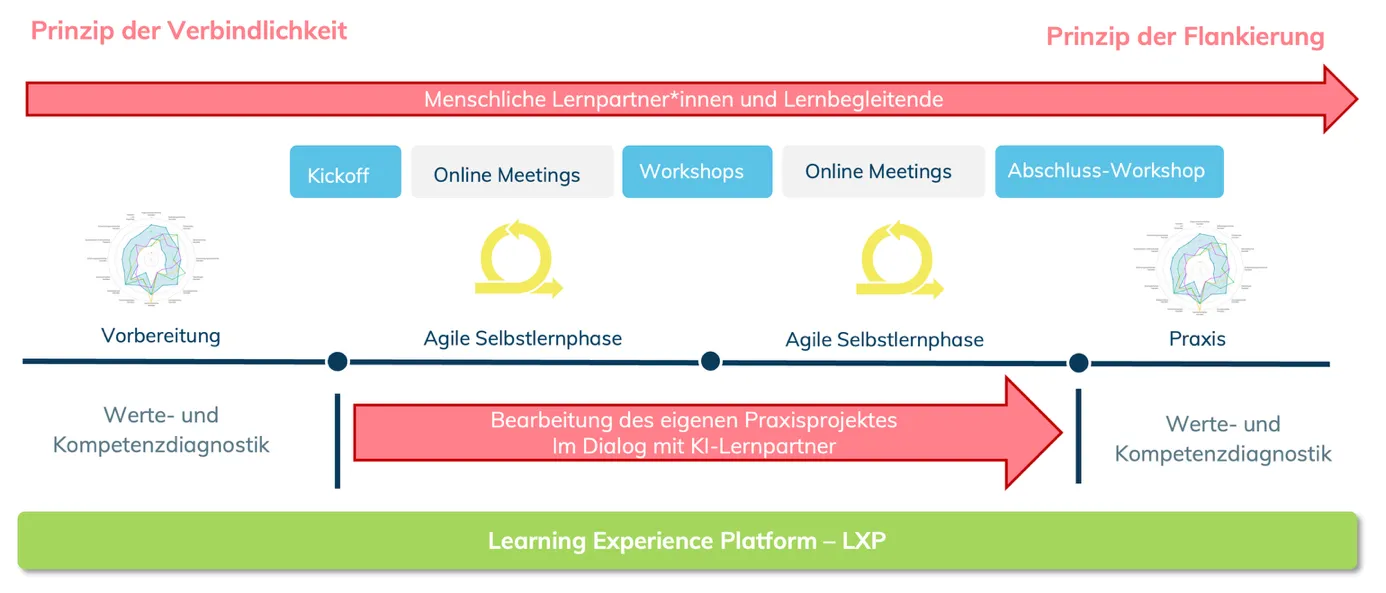
The learning process should be started with the familiar opening in a seminar room or in a virtual space. Here it is not about knowledge transfer, but about the consistent, binding planning of the self-organized learning processes. Together with the participants, a learning culture is created that is characterized by a high degree of commitment as well as by mutual support in the form of learning partnerships, learning groups, or also project diaries.
In this way, the participants gradually build their competence for self-organized learning and working. Modern information technology provides the learning technologies that make values- and competence-oriented learning at the workplace, in combination with e-learning, blended learning, and social learning, possible in the first place.
Social Blended Learning is values- and competence-oriented blended learning in combination with a challenging practical project or difficult practical tasks, incorporating social software in order to enable self-organized and networked learning.
The learners organize their personalized values and competence development process themselves within the framework of the practical project or practical task agreed with their manager – from defining goals through learning planning to monitoring success. In doing so, they are supported by their learning partners (co-coaching), the learning group (peer consulting), learning companions (coaching), and the respective manager (mentoring). In communities of practice, the participants can exchange their experiences from the projects in a self-organized way and further develop them together. They use the possibilities of the enabling space for learning planning, for self-organized knowledge building, for communication and collaboration on the net, and for obtaining feedback.
Fig. Social blended learning arrangement
With this learning architecture, development processes become possible that are shaped by values and competence orientation as well as self-organization, and whose „common thread" is formed by practical projects and challenges in the work process.
In the self-organized development phases, the participants link formal and informal learning processes into a systematic values and competence development process. Important is the use of digital learning instruments, of social media, accompanied by intensive, emotionally activating personal conversations with managers and from employee to employee. This paradigm shift encompasses above all the following elements.
2.11 Efficiency and Economic Viability
"Future-ready learning increases not only knowledge, but also value creation."
Values- and competence-oriented learning in the process of work, supported by AI, is significantly more effective than formal learning, saves costs, shortens learning time, and delivers a higher ROI than classic seminars.
High learning efficiency through targeted and individual learning in dialogue with the AI based on an AI-based skills diagnostics,
Sustainable learning through the direct, self-organized application of knowledge in practice with the goal of personalized values and competence development,
Intrinsic learning motivation, since learning takes place in one's own challenging tasks in practice,
Increase in performance through directly applicable solutions for one's own work processes (according to Learning Guild 2025, the error rate is reduced by up to 97%),
Significantly reduced costs because the learning processes are planned in a self-organized way with the help of AI and implemented in the work process (according to Learning Guild (2025), for example, education costs are reduced by over 50%, the necessary times for onboarding are shortened by over 40%, and the error rate drops by 97%),
Targeted development of the organizational and learning culture, by enabling the building of values and thus the attitude of all employees,
Increased attractiveness as an employer through the values orientation and attractive, innovative development opportunities,
Lower turnover and improved employee retention (according to Learning Guild 2025, by 35%),
Accurate personnel selection and career advice with the help of skills diagnostics.
Overall, the ROI of education increases significantly.
Workplace Learning also helps to significantly increase the attractiveness as an employer, because applicants feel drawn by these learning opportunities. Skills diagnostics helps to optimize personnel selection and career advice. Employee retention (retention management) improves, employees are retained and motivated to deliver performance. Consistent skills management is thus retention management.
Chapter 3
Sources
All sources can be found in:
BIRGELEN, SAUTER (2026): Workplace Learning – next Generation. Selbstorganisiertes und dialogisches Lernen mit KI Lernpartnern, Freiburg
SAUTER, STOLLER-SCHAI (2026): Toolbox. KI-gestütztes Lernen. Werkzeuge Methoden und Praxis für den Arbeitsalltag, Stuttgart
SAUTER, STOLLER-SCHAI (2025): Selbstorganisiertes Lernen mit generativer KI. Neue dialogische Lernwelten im beruflichen Kontext, Stuttgart
ERPENBECK, J.; SAUTER, W., with a practical contribution by SAUTER, R. (2nd ed. 2024, 2021): Future Learning und New Work. Das Praxisbuch zum gezielten Werte- und Kompetenzmanagement, Freiburg
About the Author
Prof. Dr. Werner Sauter
Werner Sauter is a co-partner and senior consultant of oneclick Learning GmbH in Bonn, which conceives and implements AI-based skills diagnostics systems as well as innovative learning solutions. He is the scientific director of the ValCom Institute, which conducts research in the field of corporate learning.
For many years he has accompanied renowned organizations such as Siemens AG, Deutsche Bahn AG, or the German Armed Forces as well as universities in the conception and implementation of future-oriented educational approaches.
Corporate Learning ExpertLeibniz-Sozietät der Wissenschaften30+ specialist books
Ready for Workplace Learning – next Generation?
Experience how Valcom skills diagnostics and VIA as an AI learning partner transform your HR development.